
Signature Ayurvedic Program
Panchakarma Detox & Rejuvenation
A personalized, physician-guided Ayurvedic journey designed around your individual needs.
What Is Panchakarma?
A classical Ayurvedic approach to preparation, therapy and recovery
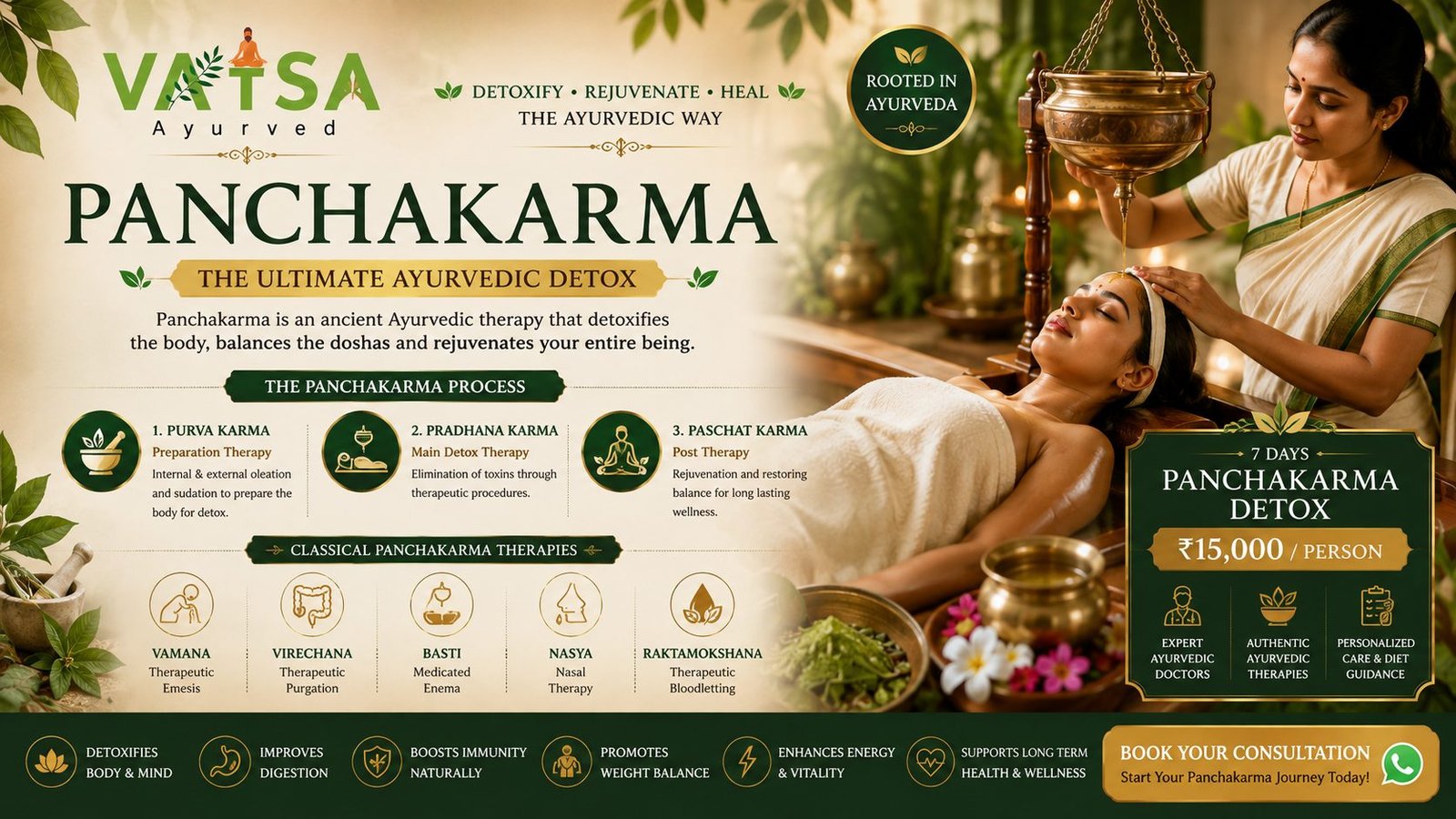
Within the Ayurvedic framework, Panchakarma is traditionally described as a structured process involving preparation, selected principal procedures and post-treatment recovery. The word itself refers to five traditional therapeutic actions — but Panchakarma is not a fixed, one-size-fits-all package of all five.
The appropriate approach is individualized: a qualified Ayurvedic physician assesses your constitution, current condition, digestive strength and general suitability before recommending preparation, and selecting which principal procedure — or combination — is appropriate for you.
Panchakarma is not a generic spa treatment, and it is traditionally understood as physician-guided rather than self-directed.
Why Panchakarma?
Modern routines, and the Ayurvedic idea of balance
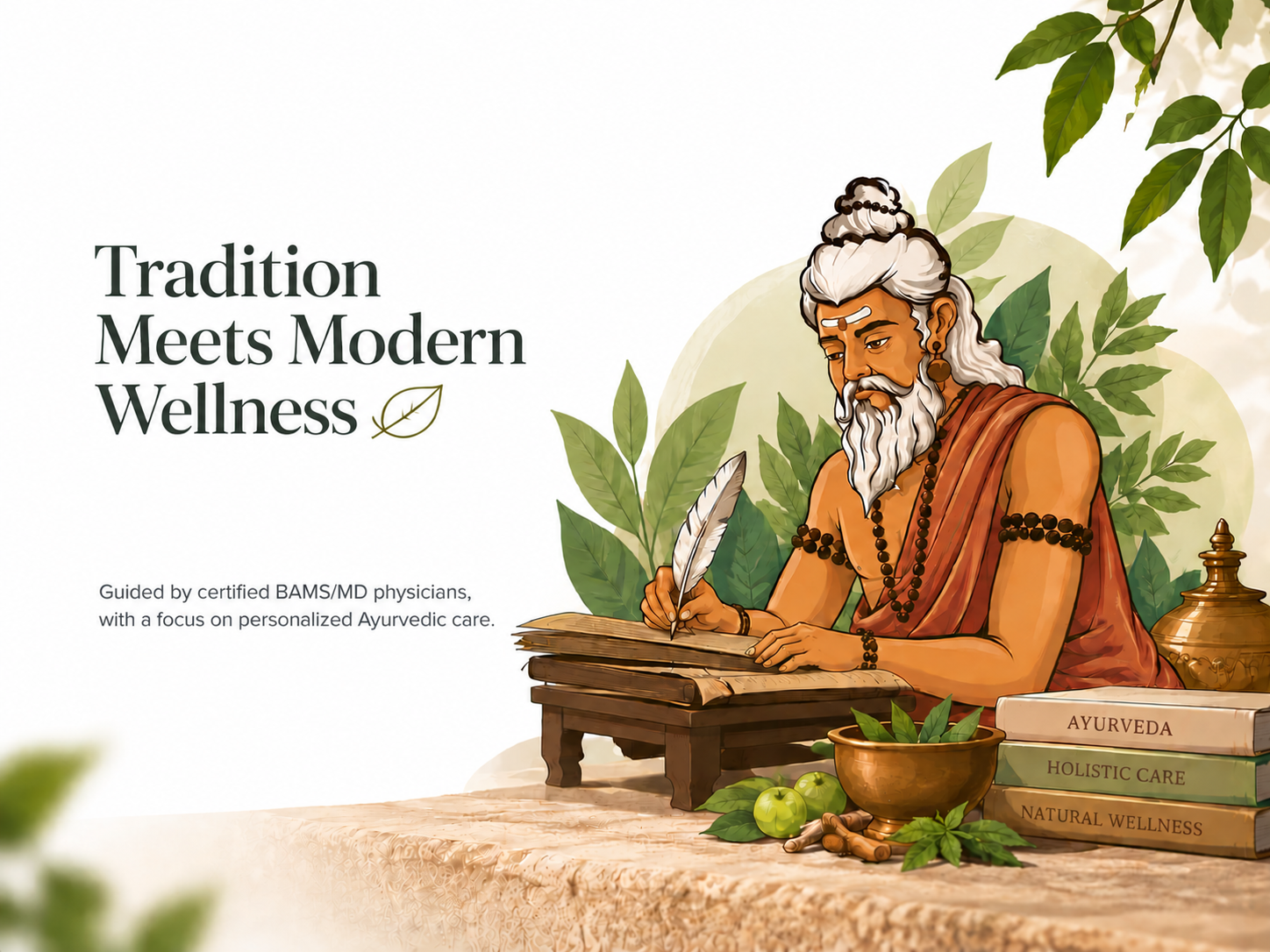
Irregular routines, processed foods, sedentary habits, stress, poor sleep, excessive screen time and general environmental exposure are common features of modern life. Within the Ayurvedic framework, these patterns are traditionally discussed in relation to Agni (digestive and metabolic capacity), Ama (accumulation from incomplete digestion), the balance of the doshas, and the condition of the Srotas (the body’s internal channels).
This is a traditional Ayurvedic framework for understanding wellness, not an established biomedical diagnosis — it is presented here as general educational context.
Ayurvedic Foundation
Understanding Your Ayurvedic Constitution
Ayurveda traditionally describes the body and mind through five elements — Akasha (ether), Vayu (air), Agni (fire), Jala (water) and Prithvi (earth) — which combine into three doshas: Vata, Pitta and Kapha.
Vata
Movement · Activity · Flexibility · Variability
Traditionally associated with movement and change in the body — activity, flexibility and adaptability.
Pitta
Transformation · Digestion · Metabolism · Heat
Traditionally associated with transformation — digestion, metabolism and the body's internal heat.
Kapha
Structure · Stability · Nourishment · Endurance
Traditionally associated with structure — stability, nourishment and physical endurance.
Your Ayurvedic constitution and current state are assessed individually by the physician — this section is general education, not a self-assessment tool.
Agni, Ama & Srotas
Agni
Digestion & Transformation
The traditional Ayurvedic concept of digestive and metabolic fire.
Ama
Accumulation / Heaviness
A traditional concept associated with residue from incomplete digestion or metabolism.
Srotas
Internal Channels
The channels or pathways through which the body is traditionally described to circulate and eliminate.
These are concepts from traditional Ayurvedic understanding, presented here for general education.
The Panchakarma Journey
Three Traditional Stages
Purva Karma
Preparation
Pradhana Karma
Main Therapeutic Stage
Paschat Karma
Recovery & Rejuvenation
Stage One
Purva Karma — Preparation
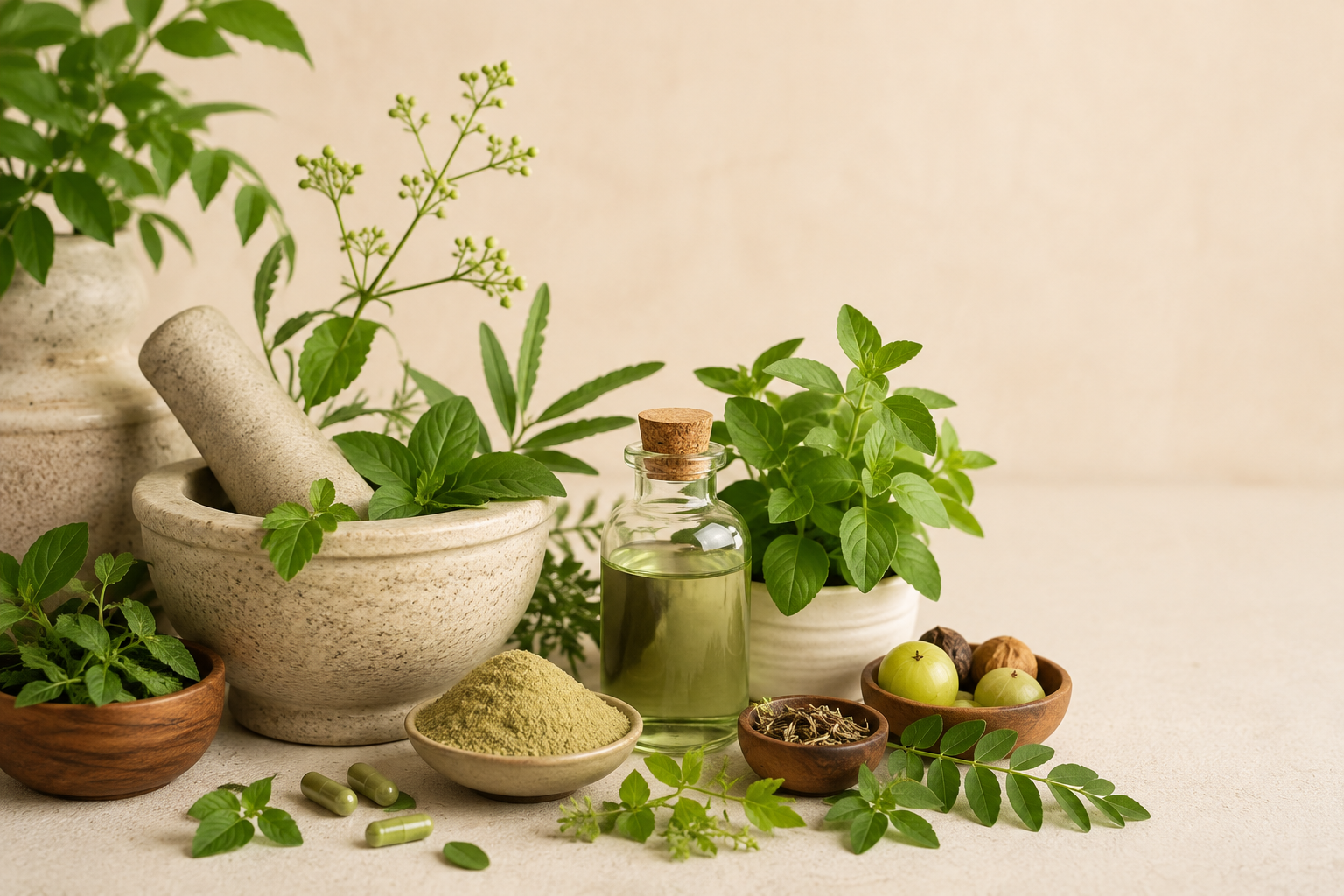
- DeepanaTraditionally intended to help kindle digestive capacity ahead of the main procedures.
- PachanaTraditionally intended to support the digestion of accumulated Ama before further therapy.
- Snehana & SnehapanaInternal and external oleation — used where prescribed by the physician, not for every individual.
- AbhyangaTraditional Ayurvedic oil massage, generally used as part of the preparatory phase.
- SwedanaTraditional herbal steam therapy, typically used alongside Abhyanga in preparation.
- Vishram (Rest)A period of rest is traditionally built into preparation before the main procedures begin.
Not every person receives every preparatory step — the physician decides what is appropriate for you.
Stage Two
Pradhana Karma — The Five Classical Actions
Panchakarma is traditionally described through five principal actions, but an individual does not necessarily receive all five. The physician selects the appropriate procedure or combination based on individual assessment, suitability and response.
Vamana
Traditional therapeutic emesis, performed only under qualified physician supervision.
Virechana
Traditional therapeutic purgation, selected according to individual assessment.
Basti
Traditional medicated enema therapy, selected according to individual needs.
Nasya
Traditional nasal administration of selected Ayurvedic preparations.
Raktamokshana
A specialized classical Panchakarma procedure requiring qualified supervision. This is an educational description of the classical framework and is not necessarily part of every Vatsa program — your physician will confirm what is appropriate and available for you.
Beyond the Five Actions
Classical Panchakarma programs can also involve supportive therapies, both external and internal, depending on the individual treatment plan. These may include external therapies such as Abhyanga, Swedana or other supportive oil therapies, and internally, physician-prescribed Ayurvedic preparations or Snehapana where indicated.
Your Vatsa program includes a physician consultation, individualized assessment and physician-guided therapies selected for you — it does not automatically include every therapy described above unless your physician determines it is appropriate.
Nutrition
Food & Nutrition During Panchakarma
Traditional Ayurvedic guidance during a Panchakarma program generally favors warm, freshly prepared, easy-to-digest meals, appropriate hydration and a gradual transition between dietary stages. Kitchari — a simple traditional preparation of rice and lentils — is a classical example of this kind of easily digestible food.
Your actual diet is personalized according to your physician’s assessment and treatment plan.
Lifestyle
Living Gently During Panchakarma
Traditional guidance during this period generally emphasizes adequate rest, regular sleep, reduced overstimulation, and gentle movement where advised — including practices such as yoga, pranayama and meditation. Avoiding excessive exertion and following your physician’s instructions closely are generally considered part of supporting the process.
Before Your Panchakarma
- Consultation with a qualified Ayurvedic physician
- Health assessment
- Discuss all ongoing medicines with your physician
- Discuss existing health conditions with your physician
- Follow any prescribed preparatory guidance
- Maintain regular sleep in the days before
- Follow an appropriate, easily digestible diet
- Reduce unnecessary overstimulation where possible
Never stop or change any medicine on your own — always discuss ongoing medicines and health conditions with your physician first.
Your Vatsa Program
Your 7-Day Panchakarma Journey
Day 1
Consultation & Assessment
Physician consultation, health assessment and personalized preparation planning.
Days 2–6
Physician-Guided Therapies
Selected Ayurvedic therapies delivered according to your individual treatment plan and response.
Day 7
Recovery Guidance
Diet transition guidance, lifestyle recommendations and follow-up planning.
Exact treatment procedures and schedule are curated after your physician consultation and may vary according to individual assessment.
Stage Three
Paschat Karma — Recovery & Rejuvenation
The period after the main procedures is traditionally treated as being just as important as the procedures themselves. Guidance generally covers a gradual return to your normal diet, continued rest, digestive support, a gentle daily routine and — where advised — yoga, pranayama and meditation.
Your physician’s follow-up recommendations help you carry these habits forward as part of daily life.
Your body. Your constitution. Your Panchakarma plan.
Personalized, Physician-Guided Care
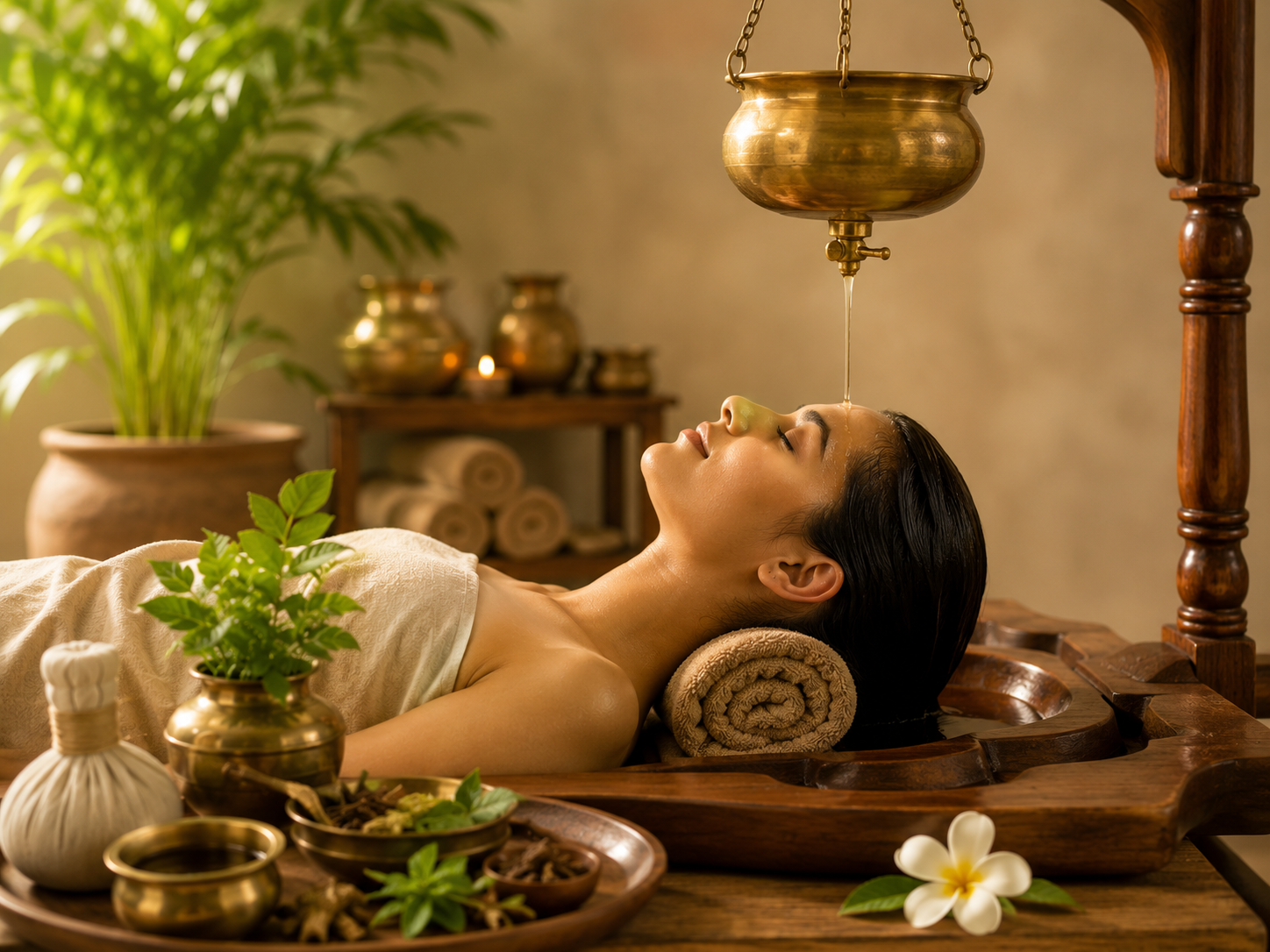
No two people necessarily require the same approach. Within the Ayurvedic framework, the physician considers your Prakriti (constitution), Vikriti (current state), digestive strength, age, physical strength, lifestyle, current health status and response to treatment before recommending a plan.
Panchakarma in Varanasi
Vatsa Ayurved offers a physician-guided, 7-day Panchakarma Detox program from Varanasi. Panchakarma is a multi-stage classical Ayurvedic process comprising Purva Karma (preparatory), Pradhana Karma (the main therapeutic procedures), and Paschat Karma (post-therapy care). The main procedures may include Vamana, Virechana, Basti, Nasya, and Raktamokshana, selected according to individual needs. Treatment duration varies by individual, and consultation is recommended before treatment.
All treatments are guided by certified BAMS/MD physicians. A consultation is part of arranging your personalized program — you can book online or reach out to discuss your requirements before booking.
Who May Consider Panchakarma?
- People seeking a structured Ayurvedic wellness reset
- People interested in traditional Ayurvedic therapies
- People wanting personalized Ayurvedic lifestyle guidance
- People seeking rejuvenation and relaxation
- People looking to establish healthier daily routines
Is Panchakarma Right for Everyone?
Suitability is always assessed individually by the physician. Careful assessment is especially important in the following situations:
- Pregnancy
- Breastfeeding
- Acute illness or infection
- Recent surgery
- Significant physical weakness
- Serious cardiac conditions
- Other significant medical conditions
Always disclose existing medical conditions and medicines to the physician.
Frequently Asked Questions
What is Panchakarma?+
Panchakarma is a classical Ayurvedic therapeutic approach traditionally organized around preparation, selected cleansing procedures and post-treatment recovery. The exact procedures are individualized after assessment by a qualified Ayurvedic physician.
Why is Panchakarma personalized?+
Within the Ayurvedic framework, each person's constitution (Prakriti), current state (Vikriti), digestive strength and overall health differ — so the physician selects an approach suited to the individual rather than applying one fixed protocol to everyone.
What are the five Panchakarma therapies?+
The five classical actions are Vamana, Virechana, Basti, Nasya and Raktamokshana. Each is a distinct traditional procedure selected according to individual assessment.
Will everyone receive all five therapies?+
No. An individual does not necessarily receive all five procedures — the physician selects the appropriate procedure or combination based on individual assessment, suitability and response.
What is Purva Karma?+
Purva Karma is the preparatory stage of Panchakarma, which may include steps such as Deepana, Pachana, Snehana and Swedana, selected according to what the physician considers appropriate.
What happens during Pradhana Karma?+
Pradhana Karma is the main therapeutic stage, where the physician-selected procedure (from among Vamana, Virechana, Basti, Nasya or Raktamokshana) is carried out under supervision.
What is Paschat Karma?+
Paschat Karma is the post-treatment recovery stage, focused on a gradual return to a normal diet, rest and lifestyle guidance to support the transition after the main procedures.
What should I eat during Panchakarma?+
Traditional guidance favors warm, freshly prepared, easily digestible food such as Kitchari, along with appropriate hydration. Your actual diet is personalized according to your physician’s assessment and treatment plan.
Can Panchakarma be done at home?+
Classical Panchakarma procedures are traditionally performed under the supervision of a qualified Ayurvedic physician and trained therapists, given the specialized nature of the preparatory and main procedures.
Is Panchakarma suitable for everyone?+
Suitability is assessed individually by the physician. Extra care and assessment are generally needed for pregnancy, breastfeeding, acute illness, recent surgery, significant weakness, serious cardiac conditions and other significant medical conditions.
How long is the Vatsa Panchakarma program?+
Vatsa Ayurved's listed Panchakarma Detox program runs over 7 days.
How much does Panchakarma cost at Vatsa Ayurved?+
Vatsa Ayurved's listed Panchakarma Detox program is 7 days at ₹15,000 per person. The exact treatment plan is personalized after physician consultation.
Does the ₹15,000 package include every Panchakarma therapy?+
No — the price covers the 7-day program itself. The specific procedures included are determined individually after consultation, and not every person receives every classical therapy.
Do I need a consultation before starting?+
Yes. A physician consultation and assessment is part of arranging a personalized, physician-guided Panchakarma program.
What should I tell the physician?+
Share your current health conditions, any ongoing medicines, past surgeries, allergies and your general lifestyle and wellness goals so the physician can assess suitability and personalize your plan.
What happens after completing Panchakarma?+
Paschat Karma guidance typically covers a gradual return to your normal diet, continued rest, gentle lifestyle practices and any follow-up recommendations from your physician.
Panchakarma is an individualized Ayurvedic therapy. Specific procedures, duration and suitability are determined after consultation with a qualified Ayurvedic physician. This page provides general educational information and does not replace medical advice.
Signature Program
Panchakarma Detox
Personalized Ayurvedic detox and rejuvenation program
7 Days — ₹15,000 / person